What is RI Diagnosis/Therapy
What is RI diagnosis?
RI diagnosis (RI examination or nuclear medicine examination) is an imaging examination that uses a minute amount of radioisotope (RI) to investigate functions, metabolism, and the expression of specific molecules in organs and tissues. A diagnostic radiopharmaceutical (a drug combining a diagnostic RI and a targeting molecule) is injected or administered orally, and a minute amount of radiation emitted by the drug accumulated in the target organ or tissue is captured with a specialized camera. In this way, the functions and lesions (cancer, inflammation, etc.) of an organ can be visualized and quantified. The obtained information is used to distinguish between benign and malignant tumors, diagnose the stage of the disease, and assess the effectiveness of treatment. A key feature of nuclear medicine examinations is their ability to assess abnormalities at the functional and molecular levels rather than the shape of organs. With nuclear medicine examinations, biological activities such as blood flow, metabolism, receptor expression, and the distribution of specific molecules can be visualized, enabling the detection of functional changes.
There are two types of nuclear medicine examinations:
- SPECT scan: An examination to investigate blood flow and functions of an organ (heart, brain, etc.)
- PET scan: An examination to evaluate small lesions, including tumors, in detail
Nuclear medicine examinations are useful for diagnosing various diseases including cancers and diseases of the heart, brain, and bones, and are performed in the following order:
Administration of a drug combined with diagnostic RI > waiting > imaging > briefing of the results.
Only a minute amount of radiopharmaceutical is administered and it is naturally eliminated from the body over time.
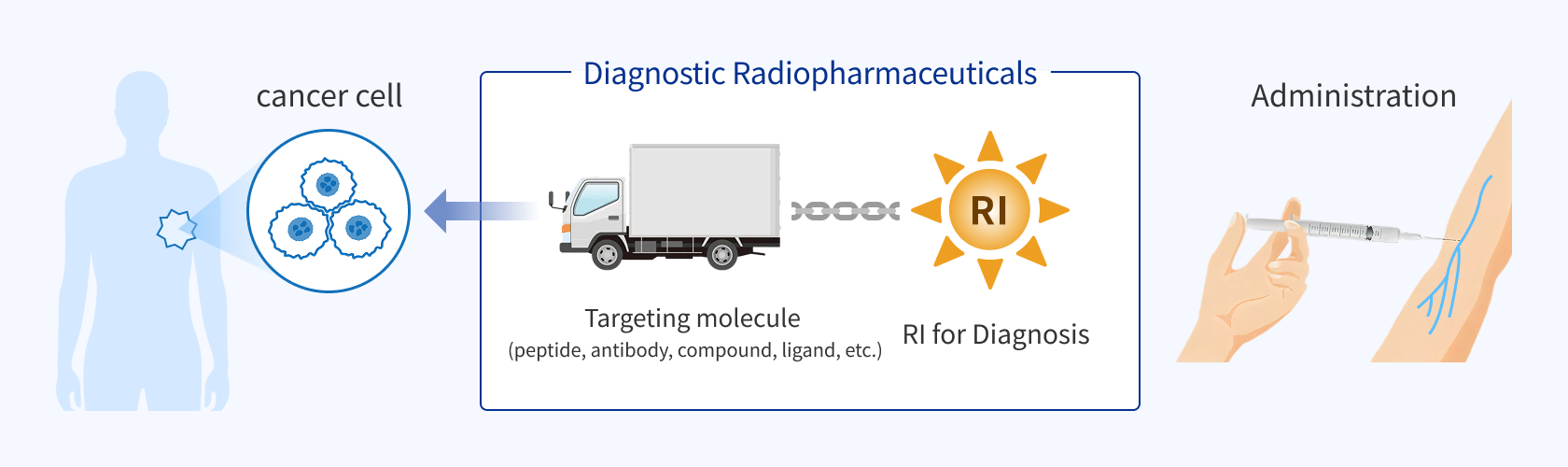
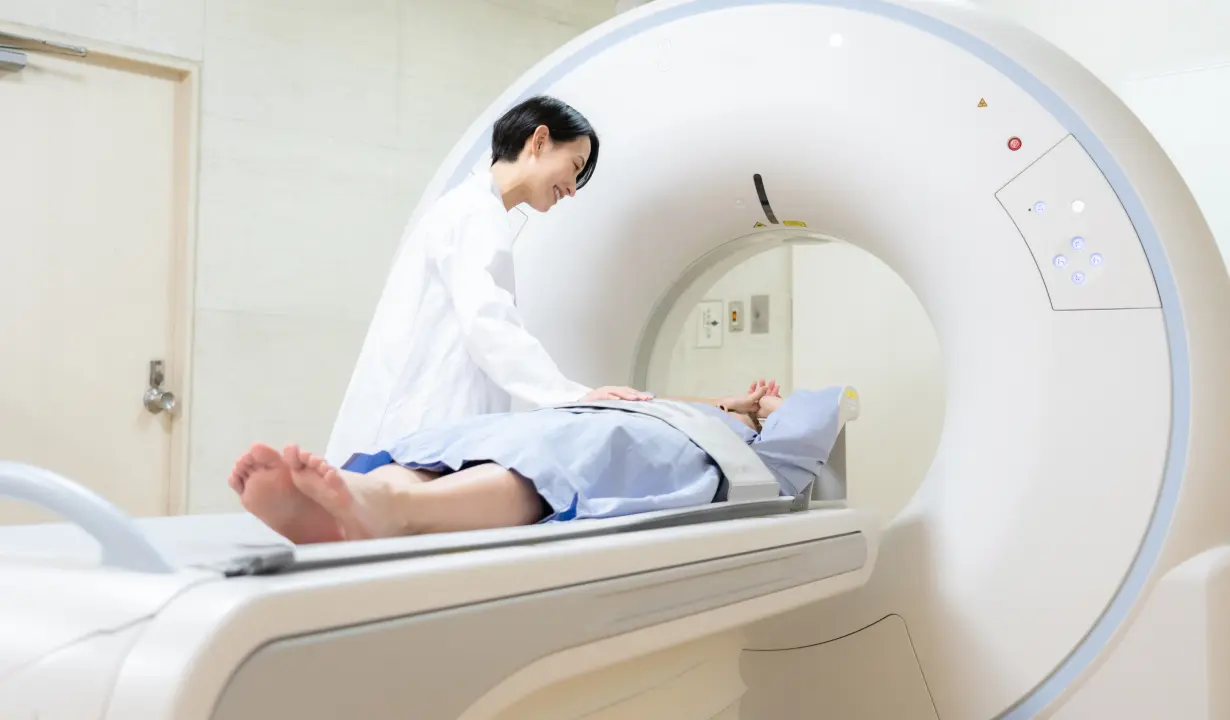
Detected with a gamma camera (SPECT/PET)

Analyzed/visualized using the specialized software
What is RI therapy?
RI therapy (internal RI therapy or internal nuclear medicine therapy) is a method to treat a disease using radioisotopes (RIs).
A therapeutic radiopharmaceutical (a drug combining a therapeutic RI that emits alpha or beta radiation and a targeting molecule) is administered by injection or intravenously for accumulation in a lesion such as cancer cells. Radiation emitted by the accumulated drug damages cancer cells and inhibits their growth. A key feature of this therapy is its ability to focus on the target area while minimizing the impact on surrounding healthy tissues.
Major therapeutic examples:
- Radioactive iodine therapy for hyperthyroidism
- RI therapy for neuroendocrine tumors
- RI therapy for pheochromocytoma, paraganglioma, or neuroblastoma
- RI therapy for prostate cancer
RI therapy is performed in the following order:
Intravenous or oral administration of a drug combined with RI for therapy > observation for several hours or hospitalization for a few days as needed (depending on the type of therapy) >discharge from the hospital.
As a certain level of care may be required until radioactive substances are eliminated from the body, please follow the specific precautions provided by the healthcare institution.
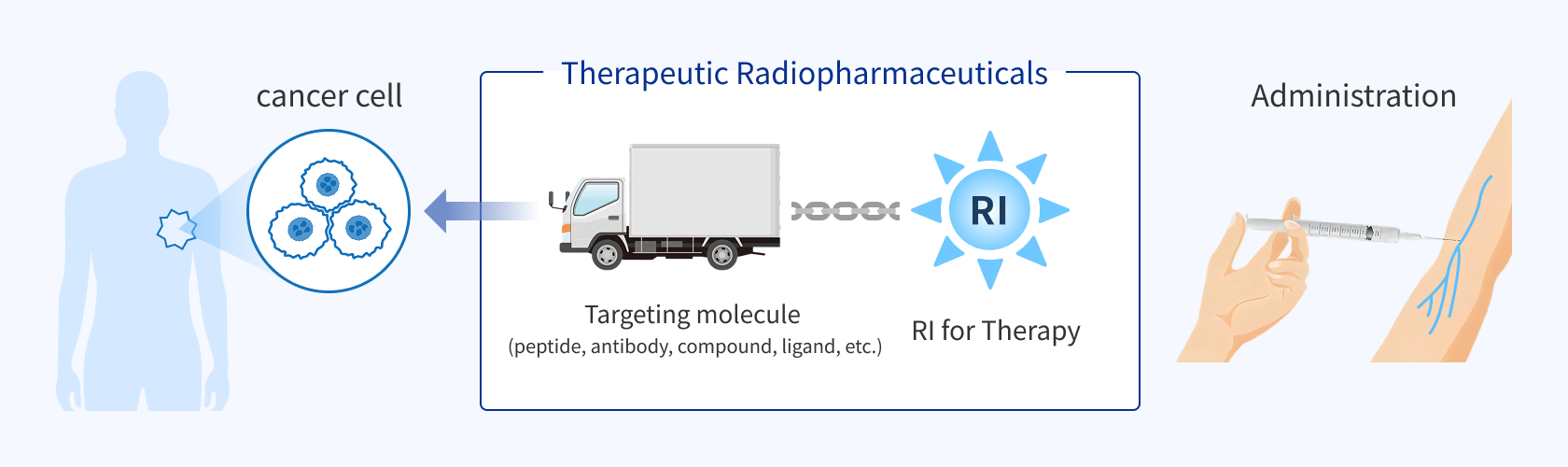

Radiation targets cancer cells

Cancer disappears or shrinks
Key features of radiopharmaceuticals
Less burden on the patient's body (non-invasive)
Because surgery is not required and the drug works by emitting radiation inside the body, it places less of a burden on the patient and may contribute to faster recovery.
Fewer side effects
As the drug selectively accumulates in a specific organ or lesion, the functions and metabolism of the organ can be assessed in detail during diagnosis. During treatment, it attacks cancer cells and other target cells intensively to minimize side effects.
Wide range of applications
Diagnostic RIs enable sensitive detection, while therapeutic RIs have a potent ability to kill cancer cells, regardless of the cancer type, making them applicable to a wide range of diseases and cancers. They are used for the diagnosis of cancers, and diseases of the heart, brain, and bones, as well as for the treatment of thyroid diseases and neuroendocrine tumors.
Shorter treatment period and fewer visits required
Most RI therapies are completed with just a few administrations. This helps reduce the time and burden associated with treatment for patients.
Safety
A minute amount of radioactive substances is used and is eliminated from the body over time. As a result, there is little impact on daily life before or after diagnosis and treatment.